




Downdetector alternatives website logo
Downdetector Alternatives

Best Downdetector Alternatives

Looking for a better way to monitor cloud service outages?

While Downdetector is a popular tool for spotting outages in real time, it’s not always the best fit for business users who need more detailed, proactive, and reliable service monitoring. Whether you’re managing a complex tech stack or simply want faster, clearer alerts, there are several alternatives worth exploring.

In this guide, we’ll walk you through seven of the best Downdetector alternatives. These are the tools that offer everything from early warning signals to official status aggregation and customizable dashboards. Let’s dive in. 👇🏽

7 Best Downdetector Alternatives to Monitor Outages in Real Time

StatusGator logo

1. StatusGator

StatusGator aggregates status from 10,000+ cloud services and SaaS vendors into a unified dashboard, with Early Warning Signals (StatusGator's early-detection system) included on every plan, including Free. Alerts via Slack, Teams, Discord, email, or webhook. StatusGator offers up to 24 months of historical records (on the Enterprise plan), enterprise-grade monitoring, and a free open-source aggregator on GitHub for teams that want to self-host.

Pricing: free plan available; paid plans start at $72/month.

Combined Outage Data

Aggregates both crowdsourced user reports and official status page updates for the most complete and accurate outage information.

Verified Incident Tracking

Filters and verifies outages from trusted sources to minimize false alarms and noise.

Multi-Source Aggregation

Continuously monitors hundreds of service status pages alongside real-time user feedback.

Customizable Alerts

Tailor notifications to your preferred channels with flexible filtering based on service, severity, and source type.

Comprehensive Historical Records

Access detailed outage histories blending community insights with official records to spot patterns and trends.

Enterprise-Grade Monitoring

Designed for businesses managing multiple cloud and SaaS services with centralized visibility and control.

CloudHarmony logo

2. CloudHarmony

CloudHarmony was a trusted platform for comparing cloud providers by offering in-depth performance analysis through detailed reports, metrics, and expert commentary. Owned by Gartner, the world’s leading IT research company, it helped users make informed decisions about cloud services. However, CloudHarmony was officially sunsetted on May 15, 2023, prompting many users to seek alternative solutions for cloud performance monitoring and benchmarking.

Cloud Performance Analysis

Provided comprehensive performance metrics across multiple cloud vendors to aid comparison and evaluation.

Detailed Reporting

Delivered data in various formats, including detailed reports and expert commentary, to give a full picture of cloud service reliability.

Vendor Benchmarking

Enabled users to benchmark and compare cloud providers based on real-world performance data.

Service Sunset

Retired in May 2023 with little explanation, leading to a gap in the market for similar cloud performance analysis tools.

Emerging Alternatives

While exact replacements are rare, newer tools offer comparable cloud monitoring, performance insights, and multi-cloud visibility.

Gartner-Backed Expertise

Benefit from the credibility and research strength of Gartner, which enhanced CloudHarmony’s value for IT decision-makers.

Cloudorado logo

3. Cloudorado

Cloudorado describes itself as “your free cloud consultant,” focusing on comparing cloud provider pricing tailored to your specific needs rather than just raw price differences. It helps users find the best cloud service options based on their unique requirements, making it easier to navigate the complex cloud market and choose cost-effective solutions.

Customized Pricing Comparison

Matches your exact cloud needs to providers, offering personalized pricing rather than generic cost listings.

Cloud Server Comparison

Input your estimated server size and requirements to find suitable cloud providers quickly.

Cloud Storage Comparison

Provides price ranges for storage needs based on your estimated usage.

Cloud Computing Comparison

Offers detailed info on various cloud hosting providers on a single page for easy evaluation.

Multi-Category Comparison

Simultaneously compares storage, computing, and server cloud options considering features like API support and security.

No Performance Analysis

Unlike CloudHarmony, Cloudorado focuses solely on pricing and feature matching, without performance benchmarking.

Down for Everyone or Just Me logo

4. Down for Everyone or Just Me

Down for Everyone or Just Me is a simple and free alternative to Downdetector that helps users check whether a website or service is down based on crowdsourced consumer reports. With a modern, minimalistic design and user-friendly experience, it’s ideal for casual users looking for quick status checks on popular consumer sites. However, it has a smaller user base and limited coverage compared to Downdetector, making it less suitable for business or enterprise needs.

Consumer-Focused Coverage

Primarily tracks popular consumer websites and services, with limited business service monitoring.

Simple & Clean UX

Offers a straightforward, minimalistic design for easy navigation and quick checks.

Completely Free

No fees or subscriptions required to use the platform.

Slow Status Updates

Takes a few seconds to retrieve the current status, which may delay urgent checks.

No Historical Data

Lacks access to past outage records or trends for deeper analysis.

No Maintenance Info

Does not provide alerts or details on scheduled maintenance, limiting proactive planning.

Is The Service Down? logo

5. Is The Service Down?

Is The Service Down? is a free, consumer-focused alternative to Downdetector that provides detailed outage reports and real-time user feedback. The platform breaks down issues by category and offers up to 24 hours of historical outage data. It also features a map view showing user-reported problem locations and integrates a live Twitter feed with posts from users and official help desks. Users can post comments and report issues themselves, making it a highly interactive tool for tracking service status.

Detailed Issue Breakdown

Categorizes service problems for clearer insights.

Historical Data

Access outage history for up to 24 hours to identify trends.

Interactive Map

Visualizes where issues are being reported geographically.

Live Twitter Feed

Displays real-time social media updates from users and support teams.

User Comments & Reports

Allows community engagement and direct issue reporting.

Free to Use

No cost to access all features.

Limited Business Coverage

Focuses mostly on consumer services with few cloud or SaaS platforms.

Outage.Report logo

6. Outage.Report

Outage.Report is a free Downdetector alternative that provides quick access to recent outage reports from nine different countries. The homepage highlights the latest reports received in the past 48 hours, making it easy to stay updated on current disruptions. Each service page offers detailed outage histories spanning several months, an outage timeline for the last 24 hours, a map showing affected areas, and a Twitter feed with related posts. Users can also report issues and leave comments, enhancing community engagement.

Recent & Historical Data

Easily view outage reports from the last 48 hours and several months of history per service.

Country-Specific Listings

Supports service status monitoring across nine countries with multilingual options.

Outage Timeline & Map

Visualize issues over the past day alongside geographic impact.

Integrated Twitter Feed

Stay informed with real-time social media updates related to outages.

User Reporting & Comments

Engage with the community by reporting problems and commenting on issues.

Free to Use

No fees for accessing all features.

Cluttered Pages

Service status pages can be overwhelming and difficult to navigate quickly.

Limited Business Focus

Primarily consumer services, with few cloud or SaaS platforms monitored.

Low US Coverage

Few US-based services tracked compared to other platforms.

User-Reported Data

Outage info is crowdsourced, not directly from official status pages.

CloudCheckr logo

7. CloudCheckr

CloudCheckr is a cloud management platform designed to optimize cloud usage by reducing costs while ensuring security and compliance. Unlike CloudHarmony, which focused on performance analysis, CloudCheckr emphasizes visibility and intelligence to help organizations find and manage cloud services that best fit their specific needs. It is widely used by enterprises such as Accenture, Logitech, and Lumen, making it a strong alternative for those looking to improve cloud cost-efficiency and governance.

Cost Optimization

Tracks cloud spending trends and provides actionable insights to reduce expenses.

Resource Monitoring

Monitors cloud resources for better allocation and future optimization.

Security & Compliance

Automated detection and remediation of security and compliance issues within cloud infrastructure.

Cloud Visibility & Analysis

Offers detailed usage and cost analysis to help understand cloud consumption.

Enterprise Focus

Trusted by large organizations to manage and optimize their cloud environments.

Comprehensive Cloud Management

Combines cost, security, and usage monitoring into one platform for streamlined cloud governance.

What is Downdetector?

Screenshot of the Downdetector website

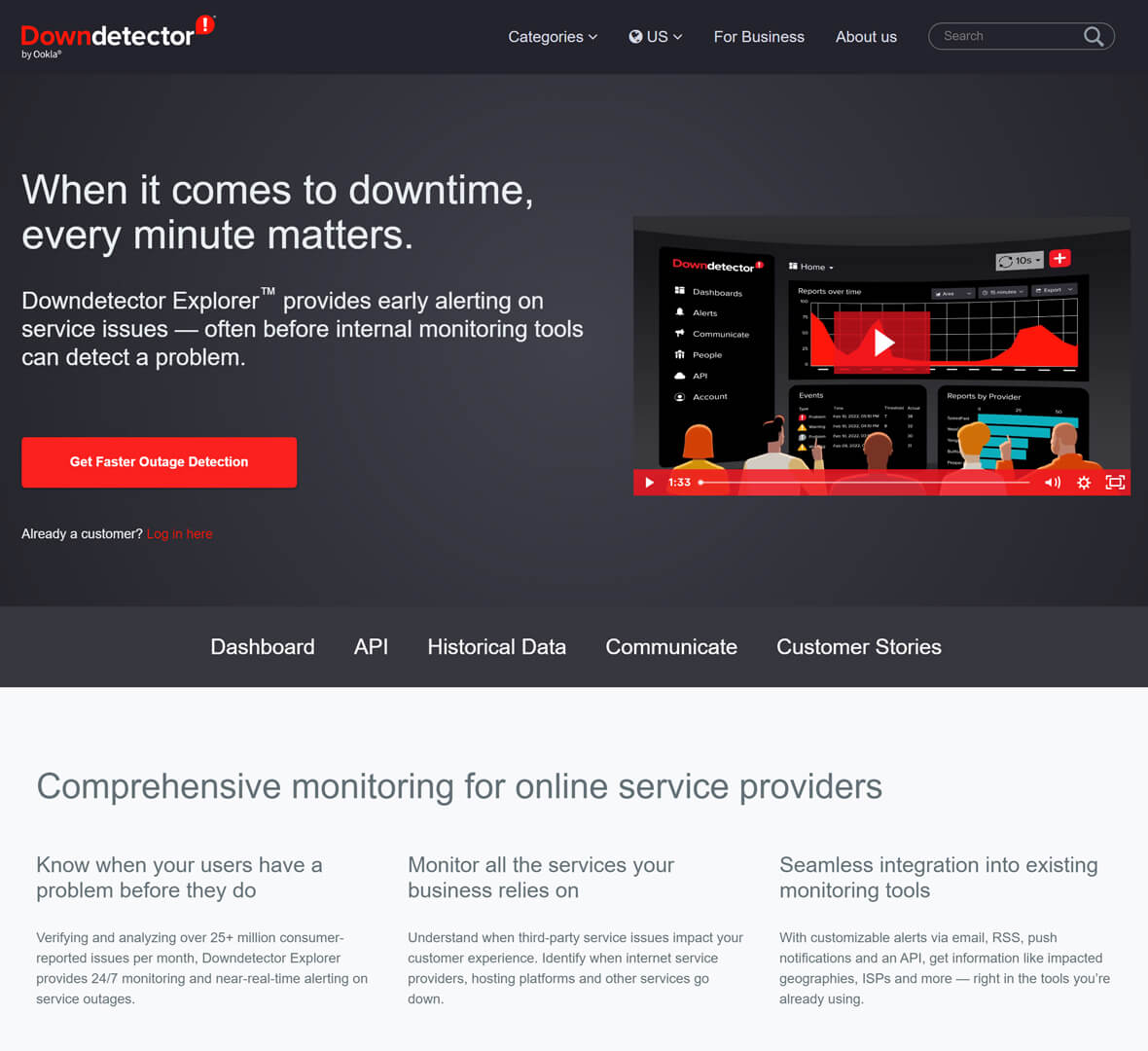
Downdetector is an online platform that monitors the status of websites, internet services, mobile apps, and other digital platforms in real time. It collects outage reports from users across the globe and visualizes service disruptions on a centralized dashboard. By aggregating user-submitted data, it helps identify spikes in problem reports that may indicate a broader outage or connectivity issue. This crowdsourced approach allows Downdetector to detect issues quickly, making it a go-to resource for consumers when a popular site or app appears to be down.

While Downdetector is particularly useful for everyday users wanting to check if a site like Instagram, YouTube, or Amazon is experiencing problems, it has limitations for business use. The platform primarily caters to consumers and doesn’t offer the level of granularity, detailed service component monitoring, or integration capabilities that IT teams or businesses may need. Its data is unofficial and based on user input, which can lead to false positives or lack of critical context. For organizations that rely on accurate, proactive monitoring across a broad range of services, Downdetector is often a starting point, but is not suitable for companies.

Why Use a Downdetector?

Why use Downdetector

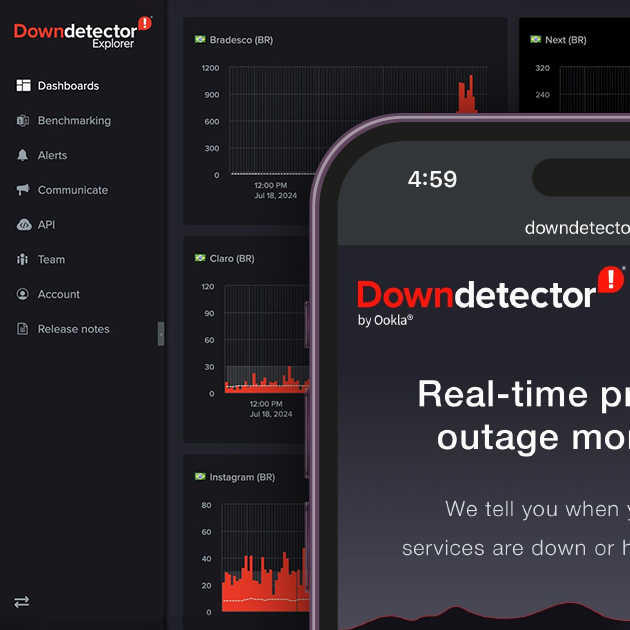
Using a Downdetector can save time and reduce frustration when you’re experiencing issues with a website, app, or online service. Instead of endlessly troubleshooting your own device or network, you can quickly check if others are reporting similar problems. Downdetector provides real-time data, outage maps, and user comments, helping you determine whether the issue is widespread or isolated to your setup. For casual users, this instant visibility is especially valuable during unexpected disruptions to essential services like social media, streaming platforms, or payment systems.

For businesses and support teams, Downdetector can act as an early warning system to gauge customer impact during an outage. While it’s not a substitute for professional monitoring tools, it offers a fast, publicly accessible way to detect potential service interruptions that may affect users. This can help teams react quickly, communicate with customers more effectively, and manage expectations during downtime. In short, Downdetector is a simple yet powerful way to stay informed when digital services don’t work as expected.

Why Search for Downdetector Alternatives?

While Downdetector is one of the most well-known platforms for checking service outages, it may not always meet every user’s needs. Some users look for alternatives because they want more detailed reporting, customizable alerts, or access to historical outage data that Downdetector may not provide. Others may prefer platforms with a different interface, region-specific data, or integration capabilities with tools like Slack or Microsoft Teams. In some cases, users are simply seeking more transparency or accuracy in how outage reports are collected and displayed.

Additionally, businesses and IT professionals may search for Downdetector alternatives that offer more advanced monitoring features or enterprise-level dashboards. While Downdetector relies heavily on crowd-sourced data, some alternatives combine user reports with direct infrastructure monitoring, offering a more comprehensive view of service health. Exploring multiple tools can help users find the one that best aligns with their workflow, industry requirements, or preferred data sources, ensuring better reliability when monitoring mission-critical applications and services.

Don't Rely on Guesswork During an Outage

Get verified status data and Early Warning Signals from 10,000+ vendors — free to start.

Frequently Asked Questions

StatusGator is widely considered the best Downdetector alternative for teams and businesses — it aggregates 10,000+ official status pages into one dashboard with Early Warning Signals included on every plan, including Free.
StatusGator stands out for aggregating data from official status pages and crowdsourced user reports, giving users the most complete picture of outages and service disruptions.
Yes, tools like CloudHarmony (now sunsetted), CloudCheckr, and StatusGator have a strong focus on cloud providers. StatusGator, in particular, continues to monitor hundreds of cloud services including AWS, Azure, Zoom, and GitHub—making it a go-to option for DevOps and IT professionals.
Down for Everyone or Just Me is a minimalistic, user-friendly tool to quickly check website availability. However, it lacks features like historical data and real-time alerts, which are available with StatusGator.
If you’re looking to compare cloud providers, CloudHarmony was once the leading tool, but it was retired in 2023. For pricing comparisons and feature filtering, Cloudorado is a great option. For live status monitoring, StatusGator is the best current alternative.
StatusGator supports Slack, Microsoft Teams, webhook integrations, and email alerts—making it perfect for teams who need to stay informed and respond quickly to incidents.
Yes! StatusGator provides detailed historical uptime records, helping users identify recurring issues or trends over time. Outage.Report also includes multi-day history but is more consumer-focused and less reliable for business services.
Is The Service Down?, Outage.Report, and Down for Everyone or Just Me all focus on consumer services like Netflix, Spotify, and gaming platforms. If you’re looking for something more business-grade, StatusGator is the better option.
Yes. StatusGator's free plan monitors up to 3 vendors with Early Warning Signals included, no credit card required. It’s a business-oriented option in addition to the free consumer-focused tools already listed (Down for Everyone or Just Me, Is The Service Down?, Outage.Report).
StatusGator is built specifically for this purpose. It consolidates the status of all your essential services—SaaS tools, cloud platforms, and APIs — into one easy-to-read dashboard. Perfect for IT managers and DevOps teams.
Yes, StatusGator and CloudCheckr both serve enterprise needs. StatusGator focuses on monitoring and alerting, while CloudCheckr provides cloud optimization, cost analysis, and security compliance features.